
Isocyanates are essential to polyurethane production, influencing foam quality, durability, and performance. Choosing the right supplier directly impacts product consistency and manufacturing efficiency.
As global demand for polyurethane continues to grow, understanding leading isocyanate manufacturers helps businesses make better sourcing and production decisions.
What Are Isocyanates in Polyurethane Production?
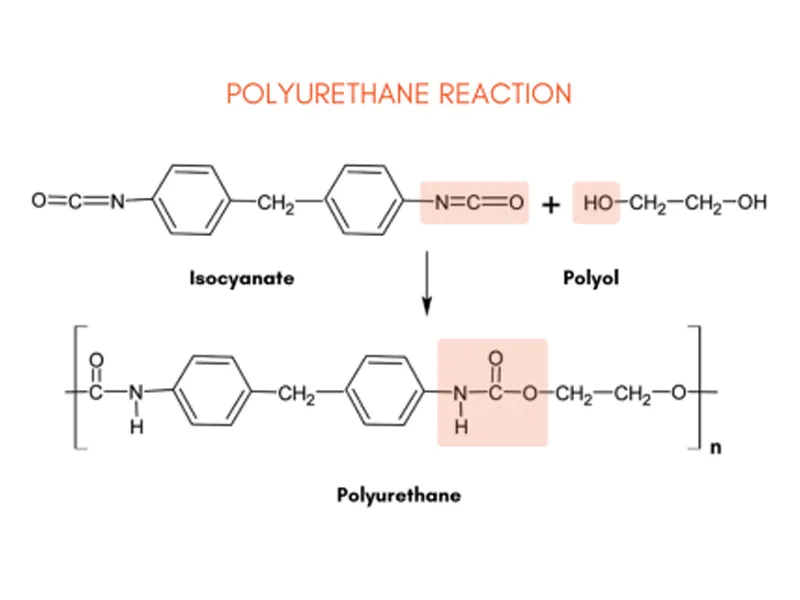
Isocyanates are reactive chemicals that combine with polyols to form polyurethane. This reaction creates foam, coatings, adhesives, and elastomers used in many industries.
The most common types include MDI for rigid foam and TDI for flexible foam. Each type serves different applications depending on performance requirements.
Global Isocyanate Market Overview
The global isocyanate market is driven by construction, automotive, and appliance industries. Energy efficiency requirements are increasing demand for polyurethane insulation materials.
Asia dominates production capacity, while Europe and North America focus on advanced applications and sustainability.
Top 10 Isocyanate Manufacturers and Solution Providers
The global isocyanate industry is shaped by a mix of established chemical giants and emerging integrated solution providers. Companies like BASF, Covestro, and Dow lead in innovation and global supply, while Wanhua drives cost efficiency and large-scale production.
At the same time, the industry is evolving toward more integrated solutions. Beyond raw materials, factors such as processing technology, equipment compatibility, and technical support are becoming increasingly important.
For polyurethane manufacturers, long-term success depends not only on choosing the right isocyanate supplier, but also on ensuring that materials, equipment, and production processes work together efficiently.
Global Isocyanate Supplier Comparison
| Company | Region | Main Products | Strength | Position |
| BASF | Germany | MDI/TDI | Innovation | Leader |
| Covestro | Germany | MDI/TDI | Sustainability | Premium |
| Wanhua | China | MDI | Cost | Fast-growing |
| Huntsman | USA | MDI | Custom | Specialist |
| Dow | USA | MDI+Systems | Integration | Global |
| Shell | Global | Feedstock | Upstream | Strategic |
| Tosoh | Japan | TDI | Stability | Reliable |
| Mitsui | Japan | Specialty | Innovation | High-end |
| Sadara | Saudi | MDI/TDI | Scale | Emerging |
| Yongjia | China | Solutions | Integration | Provider |
BASF
BASF is one of the largest chemical companies in the world and a key supplier of polyurethane raw materials. Its global presence provides stable supply across major markets.
The company offers a full range of MDI and TDI products, supported by strong R&D capabilities. BASF focuses on high-performance and energy-efficient solutions.
Its materials are widely used in construction, automotive, and appliance industries, making it a global leader in polyurethane innovation.
Covestro
Covestro is known for its advanced polymer technologies and sustainability-driven approach. The company was formerly part of Bayer and has a strong legacy in materials science.
It provides high-quality MDI and TDI products, along with specialty isocyanates for coatings and elastomers. Its solutions are widely used in high-end applications.
Covestro is also leading efforts in circular economy development, focusing on reducing emissions and improving material recyclability.
Wanhua Chemical
Wanhua Chemical has become one of the most competitive isocyanate manufacturers globally. It is currently one of the largest MDI producers in the world.
The company combines large-scale production with cost efficiency, allowing it to offer competitive pricing while maintaining reliable quality.
Wanhua continues to expand globally, with production bases in China and Europe, strengthening its position in international markets.
Huntsman Corporation
Huntsman is a global manufacturer focused on specialty polyurethane systems. It provides MDI-based materials configured for specific industrial applications.
The company is known for its strong technical support and customized solutions, especially in automotive seating and construction materials.
Huntsman’s approach emphasizes performance optimization rather than just raw material supply.
Dow
Dow is a global leader in materials science, offering a wide range of polyurethane raw materials and system solutions.
Its strength lies in integration across the value chain, combining isocyanates, polyols, and formulation technologies.
Dow’s materials are widely used in insulation, automotive, and packaging industries, providing reliable performance and innovation.
Shell Chemicals
Shell Chemicals plays an important role in supplying upstream raw materials used in isocyanate production.
While not a major isocyanate brand itself, Shell’s global infrastructure and feedstock control make it a key part of the polyurethane supply chain.
Its contribution provides stability and efficiency in large-scale chemical production.
Tosoh Corporation
Tosoh is a well-established Japanese chemical company specializing in TDI production.
The company is known for its stable quality and reliable supply, particularly in the flexible foam market.
Its materials are widely used in furniture and bedding applications across Asia and global markets.
Mitsui Chemicals
Mitsui Chemicals focuses on high-performance and specialty isocyanates.
Its products are widely used in coatings, electronics, and automotive applications that require advanced material properties.
The company emphasizes innovation and precision, positioning itself in the premium segment of the market.
Sadara Chemical Company
Sadara is one of the largest integrated chemical complexes in the world, formed through a partnership between Saudi Aramco and Dow.
The company benefits from access to low-cost raw materials and large-scale production capabilities.
It plays an important role in supplying polyurethane materials to global markets.
Yongjia Polyurethane
SPC represents a new generation of integrated solution providers in the polyurethane industry.
Instead of focusing only on raw materials, Yongjia offers a complete system that includes isocyanate supply, polyol, equipment, and production solutions.
This approach allows customers to simplify sourcing while ensuring compatibility between materials and processing systems.
With precise metering (±1%), stable pressure control, and customized production lines, Yongjia helps manufacturers achieve consistent foam quality and reduce production risks.
Its solutions are widely used in furniture, insulation, automotive, and spray foam applications.
Key Trends in the Isocyanate Industry
Sustainability
Low-emission materials and bio-based solutions are becoming increasingly important. Manufacturers are investing in environmentally friendly polyurethane systems.
Capacity Expansion in Asia
China continues to expand production capacity, making it a key global supplier of MDI and other isocyanates.
Supply Chain Challenges
Raw material price fluctuations and logistics disruptions affect supply stability. Companies must balance cost and reliability.
Growth in Energy Efficiency
Demand for insulation materials is increasing due to stricter energy regulations and growing awareness of sustainability.
How to Choose the Right Isocyanate Supplier
Choosing the right isocyanate supplier directly affects foam quality, production stability, and long-term cost. A good supplier should offer not only materials, but also reliable support.
Match the Material to Your Application
Different applications require different isocyanates.
- Flexible foam → TDI
- Rigid insulation → MDI
- CASE → specialty isocyanates
Correct selection provides better performance and fewer defects.
provide Stable Quality
Consistent material quality is critical for production.
Look for:
- Stable reactivity
- Low variation between batches
This helps reduce defects and improve efficiency.
Check Technical Support
A strong supplier should provide:
- Formulation guidance
- Process optimization
This is especially important for new projects or scaling production.
Evaluate Supply Reliability
Reliable delivery provides continuous production.
Consider:
- Lead time
- Local availability
Supply stability reduces downtime risks.
Balance Cost and Performance
Low price does not always mean better value.
Focus on:
- Product consistency
- Overall production cost
Stable materials often reduce long-term expenses.
Consider Material + Equipment Compatibility
Material performance depends on processing.
Working with suppliers who understand both raw materials and equipment helps provide consistent foam quality.
Quick Checklist
| Factor | Key Point |
| Application match | Right type (MDI/TDI) |
| Quality | Stable and consistent |
| Support | Technical assistance |
| Supply | Reliable delivery |
| Cost | Long-term value |
| Compatibility | Works with equipment |
Sourcing Blended Polyol Systems?
SPC formulates rigid, flexible, spray and elastomer polyol systems for refrigerators, cold-storage panels, SIP plants and automotive seats. ISO 9001 plant in Jiangyin, China · 60+ countries served.
✓ Free 1 kg sample
✓ TDS · MSDS · COA
✓ Reply within 24 h


