
Flexible Polyurethane Foam Material
In short: we manufacture fully formulated flexible polyurethane foam systems (blended polyol + matching TDI/MDI) for mattresses, sofa cushions, moulded car seats and footwear — from high-resilience foam with ≥45% ball rebound to viscoelastic memory foam. Blended in our own plant in China since 2010.
- Ball rebound ≥45%
- Comfort factor ≥2.8
- Samples 1–10 kg
- Batch CoA
- Manufacturer since 2010
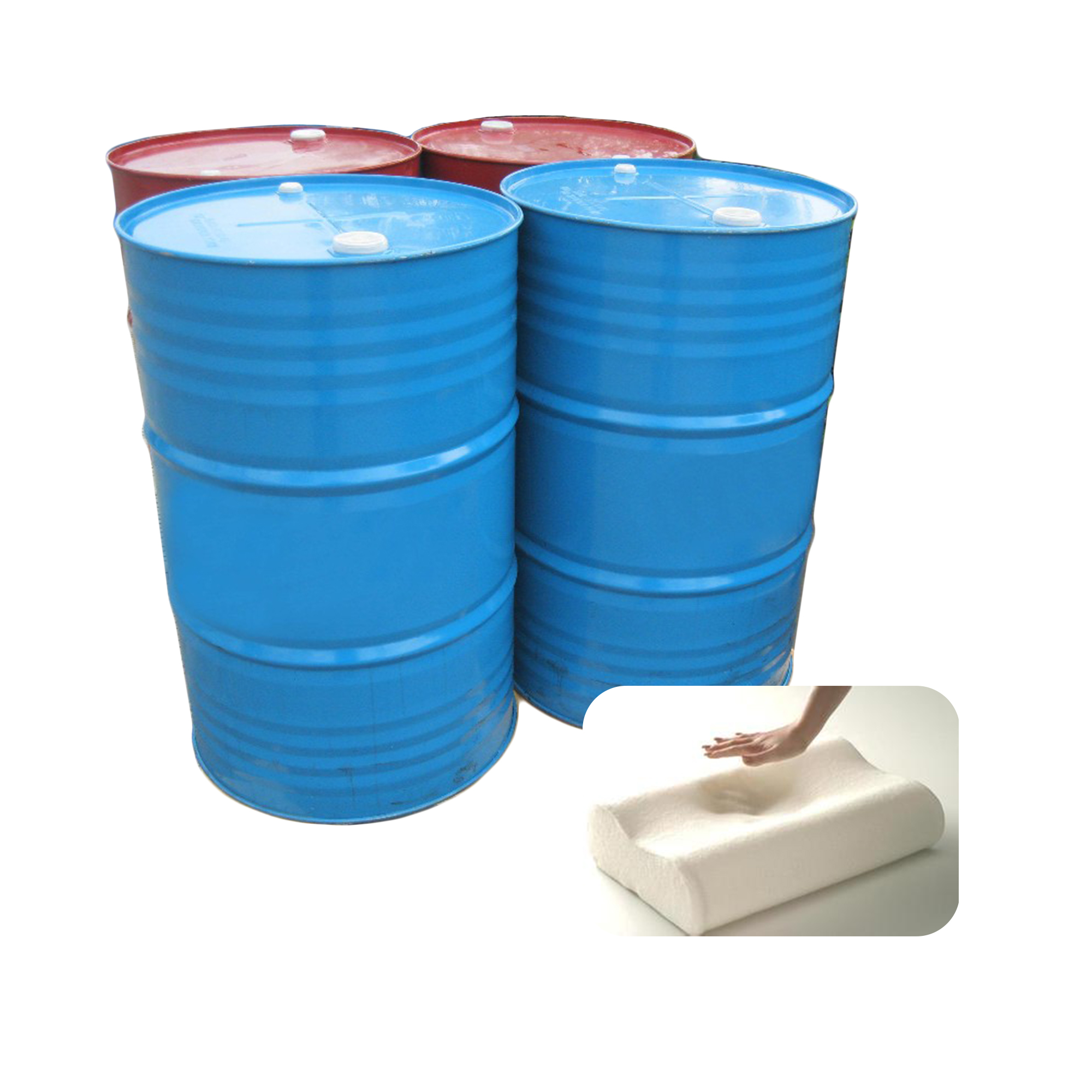
What Is Flexible Polyurethane Foam?
Flexible polyurethane foam is an open-cell elastic foam made by reacting a blended polyol (polyol, catalyst, silicone surfactant, water and additives) with an isocyanate, normally TDI or MDI. On our drums and data sheets the polyol side is component A and the isocyanate side is component B.
Unlike rigid foam, the cells stay open and interconnected, so air moves through the foam and it springs back after being compressed. How fast it springs back is what separates the two families: high-resilience foam recovers instantly, while viscoelastic (memory) foam recovers slowly and is sensitive to body temperature.
Flexible Foam Grades & Technical Specifications
Select by the feel and process you need. All three are fully formulated polyol systems.
| Grade | Typical use | Density | Reactivity (25°C) | Key measured properties |
|---|---|---|---|---|
| SPC-1009 High resilience | Car seat cushions & backrests, sofa cushions, mattresses, medical & massage cushions | 40–45 kg/m³ | Cream 12 s · Rise 2–3 min · Cure 5 min | Ball rebound ≥45% · 25% IFD ≥120 N · 65% IFD ≥315 N · comfort factor ≥2.8 |
| SPC-1015 Slow recovery (viscoelastic) | Memory pillows, mattresses, mattress topper pads | 21–35 kg/m³ (free rise) | Cream 3–5 s · Gel 8–12 s · Tack-free 10–15 s | Temperature-sensitive pressure relief · high air permeability · adjustable soft–firm |
| PU-ZDHR040 Moulded car seat | Moulded automotive seat cushions | 38–45 kg/m³ (free rise) | Cream 10–13 s · End of rise 53–60 s | Polyol viscosity 1100±50 mPa·s · SG 1.03±0.005 · water content 3±0.05% |
Typical values from our published technical data sheets. These are polyol systems — final density and hardness are set by your formulation, mould and process, not by a fixed sheet size. Full TDS available on request — no login required.
Key Applications of Our Flexible PU Foam
Furniture, Bedding & Mattresses
Two routes depending on the feel you want: SPC-1009 for high-resilience cushioning that springs back, or SPC-1015 for viscoelastic memory foam that contours slowly to the body.
- High resilience: ball rebound ≥45% and comfort factor ≥2.8 for mattresses and sofa cushions that keep their support.
- Slow recovery: temperature-sensitive pressure relief with high air permeability — softness tunable from soft to firm.
- Durability: resists deformation and sagging, extending the life of the finished product.
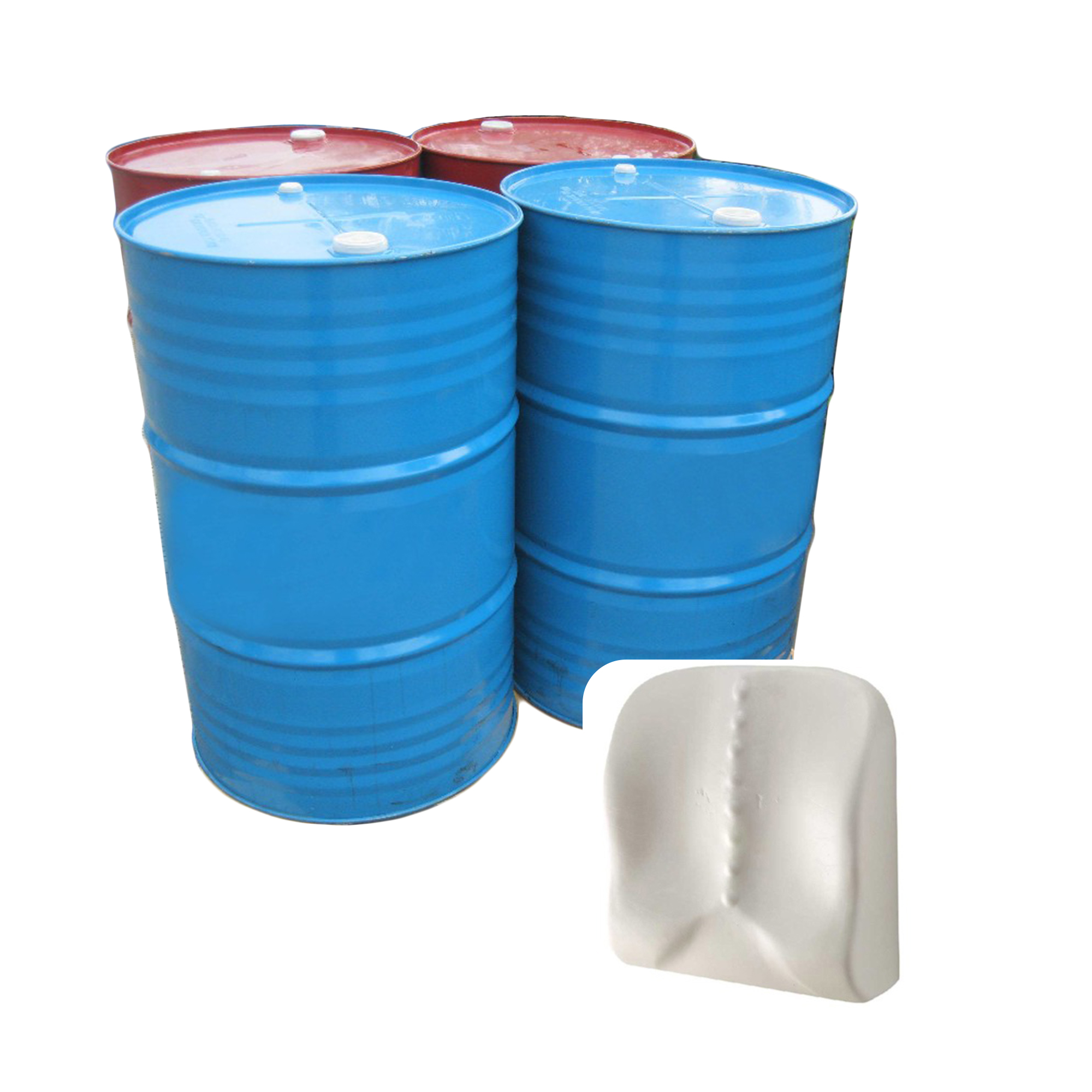
Automotive Seating
PU-ZDHR040 is our moulded car-seat system: cold-cure, single-shot casting straight into the tool.
- Support over long drives: high resilience and high compression load carry the occupant without bottoming out.
- Consistent moulding: cream 10–13 s and end of rise 53–60 s give a controlled, repeatable cycle.
- Tunable: density and hardness adjusted to the passenger weight and preference your OEM specifies.
- Consistent quality: batch-to-batch IFD holds within spec so seat feel and support don’t drift across a production run.
Footwear — Insoles, Midsoles & Outsoles
Flexible PU goes into every layer of the shoe, each with a different hardness target.
- Insoles: cushioning and support that reduce fatigue over long walking or standing.
- Midsoles: elasticity that absorbs impact and protects joints, without adding weight.
- Outsoles: grip and abrasion resistance for traction in sport and everyday wear.


Speaker & Audio Enclosure Acoustic Damping
SPC-1015 free-rises at 21–35 kg/m³ with an open, interconnected cell structure — the density range and cell openness that acoustic-lining converters look for when they fill or line speaker cabinets, subwoofer boxes and audio equipment housings.
- Open-cell structure: interconnected pores let sound waves enter and dissipate as heat instead of reflecting, reducing internal standing waves and cabinet resonance.
- Density range: 21–35 kg/m³ free-rise, adjustable by formulation to match your cabinet volume and target damping.
- Cut & fabricate friendly: supplied as a polyol system so your plant blows, cuts and laminates the foam to your own enclosure geometry — no fixed sheet size.
Note: this is a fit based on the foam’s open-cell structure and density — we have not commissioned third-party NRC/acoustic lab testing for this grade. Ask us for the TDS and we can discuss a validation trial for your enclosure.
See the Foam in Production
Why Choose SPC as Your Flexible PU Foam Supplier?
Formulated in-house, not resold
We blend the polyol, catalyst, surfactant and additives ourselves, so the system is tuned to your line.
Both resilience routes
High-resilience (SPC-1009) and viscoelastic memory foam (SPC-1015) from one supplier.
Batch CoA on every lot
Each shipment ships with a Certificate of Analysis covering the measured properties.
Ungated TDS & MSDS
Full technical and safety data sheets on request — no login wall.
Samples 1–10 kg, trials from 200 kg
Trial quantities so you can validate the foam on your own line first.
Matching isocyanate supplied
Flexible systems run on TDI or MDI — supplied to match your polyol and ratio.
Frequently Asked Questions
What density can I get from your flexible foam polyols?
What is the difference between high-resilience and memory foam?
Do you supply the matching isocyanate?
Can you tune the hardness for my product?
What is your minimum order quantity?
Can I get the TDS, MSDS and a free sample?
Can flexible PU foam be used for speaker or audio enclosure acoustic damping?
Can flexible PU foam be used for speaker or audio enclosure acoustic damping?
Related Flexible Foam Pages
Need a Flexible Polyurethane Foam System for Your Line?
Tell us your foam type, target density, process and volume — our engineers reply within 24 hours with a formulation and the full TDS.


