
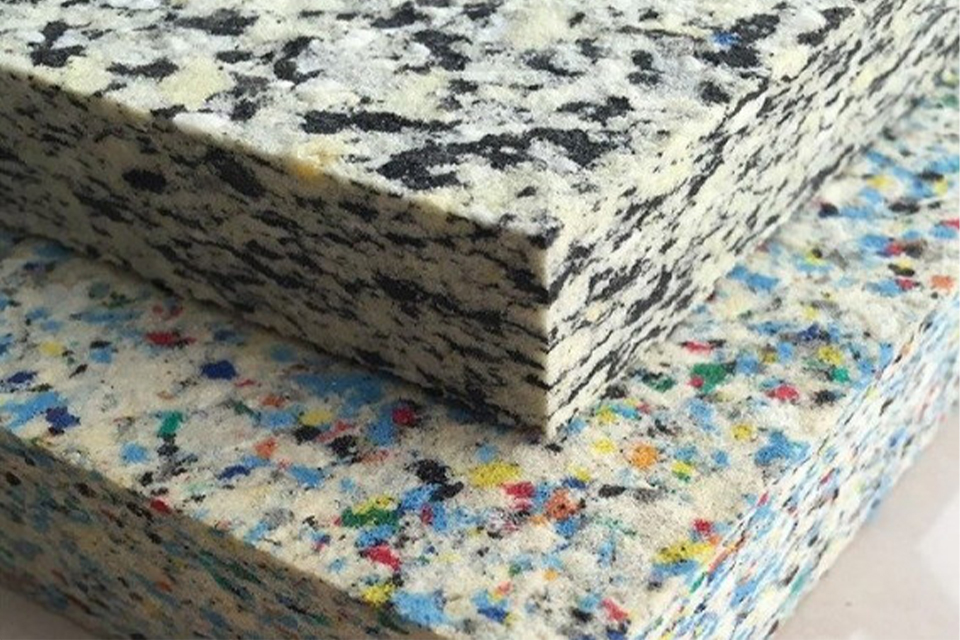
Polyurethane (PU) foam and fiberglass are the two dominant industrial insulation choices in cold-storage panels, refrigerated transport, building envelopes, and HVAC ductwork. Both work — but for industrial buyers selecting at scale, the right answer depends on five quantifiable factors: R-value per inch, 25-year thermal degradation, moisture and air-leakage resistance, fire-rating pathway, and lifetime cost including labor.
This guide gives you the decision matrix industrial procurement teams actually use, with measured performance data referenced to ASTM C518 and ISO 8301 test methods.
TL;DR — Quick Decision
| Use case | Recommended | Why |
|---|---|---|
| Cold-storage panels (-40°C to 0°C continuous) | PU rigid foam | R-7/inch + closed-cell moisture barrier + 25-yr stability |
| Walk-in freezer + reefer truck body | PU rigid foam | thermal cycling tolerance + structural sandwich panel |
| Residential attic batt | Fiberglass | lower cost, no vapor barrier needed indoors |
| HVAC duct wrap (interior) | Fiberglass | fire rating + sound absorption |
| Below-grade foundation | PU spray foam | continuous air seal + closed-cell water resistance |
| Industrial cold pipe insulation | PU rigid pipe section | minimal condensation + factory-formed shape |
PU Foam vs Fiberglass — 5-Factor Industrial Decision Matrix
The four columns below are scored 1–5 (5 = best). Final column is the dominant industrial use case for that material.
| Factor | PU rigid foam | PU spray foam | Fiberglass batt | Fiberglass rigid board |
|---|---|---|---|---|
| R-value per inch (initial) | 6.5–7.0 (5/5) | 6.0–6.5 (5/5) | 3.1–3.4 (2/5) | 4.0–4.4 (3/5) |
| 25-year R-value retention | 85–90% (4/5) | 80–85% (4/5) | 92–95% (5/5) | 90–93% (5/5) |
| Closed-cell moisture barrier | ✓ closed-cell (5/5) | ✓ closed-cell (5/5) | ✗ open / wicks (1/5) | partial (2/5) |
| Fire rating (ASTM E84) | Class A possible (4/5) | Class A possible (4/5) | Class A standard (5/5) | Class A (5/5) |
| Cost per R-value-inch | $$$ (2/5) | $$$$ (1/5) | $ (5/5) | $$ (4/5) |
| Air-leakage (post-install) | very low (5/5) | very low (5/5) | high (2/5) | moderate (3/5) |
| OEM lead time (bulk) | 2–4 weeks | 1–3 weeks | 1 week | 1–2 weeks |
| Best fit | Cold-storage panel OEM | Building envelope + spray applications | Residential / non-critical | Commercial roofing |
Factor 1 — R-value Per Inch and Long-Term Retention
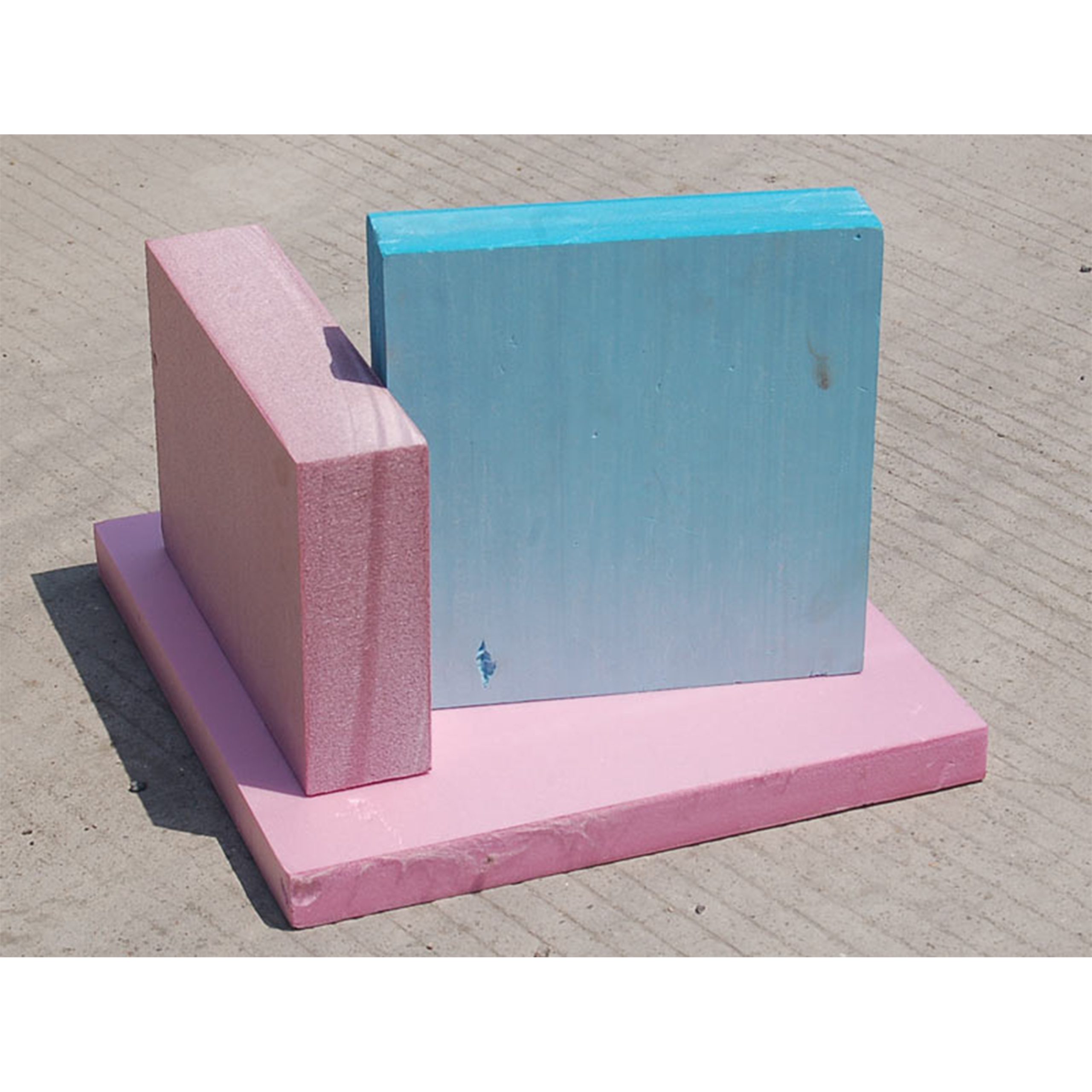
R-value is the headline number procurement teams optimize first, but the long-term retention curve matters as much as the day-one value. PU rigid foam starts at R-7/inch (per ASTM C518 testing at 75°F mean temp). Fiberglass batt sits at R-3.1–3.4/inch — meaning PU delivers roughly 2× thermal resistance at the same panel thickness.
The trade-off: PU foam loses 10–15% R-value over 25 years due to blowing-agent diffusion (the HFC-to-HFO transition has improved this — see EPA SNAP Rule 23 for current acceptable blowing agents). Fiberglass retains 92–95% of initial R-value because it has no diffusing gas — air is the insulator, and air doesn't migrate out.
For cold-storage operators planning 20-year panel life, PU still wins on absolute R-value: a 4-inch PU panel at year 25 outperforms a 5-inch fiberglass panel at year 1, while saving 1 inch of cold-room interior volume.
Factor 2 — Moisture and Air-Leakage
This is where industrial cold-chain operators stop comparing. Fiberglass wicks moisture. Once wet, R-value drops 30–50% and recovery requires complete drying — impossible in a 24/7 cold-storage operation. PU closed-cell foam is hydrophobic; water sits on the surface and runs off.
For walk-in freezers, reefer trailers, and cold-storage panel manufacturing, air-leakage is the second hidden cost. Fiberglass batt requires a separate vapor barrier installed perfectly. PU rigid panels integrate the vapor barrier into the closed-cell structure — one material, one install, one failure point fewer.
Factor 3 — Fire Rating and Regulatory Pathway
Both materials reach Class A flame-spread rating per ASTM E84, but the pathways differ:
- Fiberglass: inherently non-combustible (mineral wool / glass fibers don't burn). Default fire class without additives.
- PU foam: requires brominated or phosphate flame retardants in the formulation. Modern HFO-blown PU with appropriate flame-retardant package meets ASTM E84 Class A. However, in fire-exposure conditions, PU produces hydrogen cyanide combustion products — this is why high-rise building codes (NFPA 285 assembly) typically restrict exposed PU to specific tested wall assemblies.
For cold-storage panels (interior, behind metal facers) this is rarely a concern. For building envelope spray foam, verify your local code path — some jurisdictions require an intumescent thermal barrier over exposed PU.
Factor 4 — Cost Per R-Value-Inch (Lifetime)
Sticker price favors fiberglass by 3–5× per cubic foot. But lifetime cost-per-R-value-inch is what procurement should actually compare:
| Material | Installed cost / R-1 / sq ft | 25-yr R-value cost |
|---|---|---|
| Fiberglass batt | $0.08–0.12 | $2.40–3.60 |
| Fiberglass rigid board | $0.18–0.25 | $5.40–7.50 |
| PU rigid foam (panel) | $0.28–0.40 | $8.40–12.00 (raw) |
| PU spray foam | $0.45–0.65 | $13.50–19.50 |
Raw numbers show fiberglass winning. But add the labor cost of separate vapor barrier installation, the moisture-loss R-value depreciation, and the structural sandwich-panel value of PU — and PU cold-storage panels often break even with fiberglass within 8–12 years and pull ahead permanently after that.
Factor 5 — OEM Supply Lead Time and Bulk Pricing
For industrial buyers ordering ≥ 1 container of insulation material, the supply chain differs:
- Fiberglass batt: commodity, available locally in most markets, 1-week lead time from distributors
- PU rigid panel: built-to-order from foam-injection plants, 2–4 weeks for standard density (32–40 kg/m³), 4–6 weeks for custom
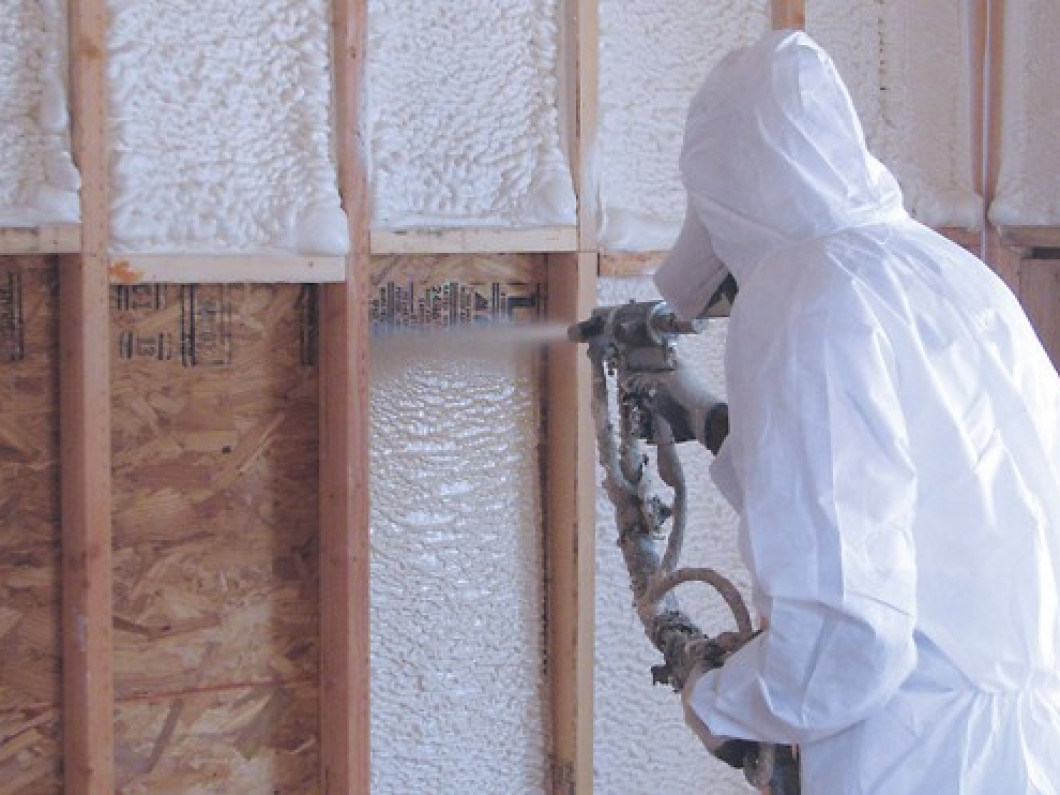
- PU spray foam (component A + B): chemicals shipped in 200L drums or IBC, 2–3 weeks ocean freight from Asia + local mix-on-site
Real-World Industrial Application
A 2026 cold-storage operator in the Hai Phong industrial zone (Vietnam) consolidated their insulation purchasing from three suppliers (fiberglass batt for walls, fiberglass board for roof, PU spray for floor) to a single PU rigid panel system using SPC's 200L drum polyol blend. After 9-month verification:
- Total installed cost: reduced from $42/m² to $34/m² (19% lower despite higher PU material cost) — savings from single-trade install
- Cold-room operating temperature: maintained -25°C with 18% less compressor runtime (measured via energy metering)
- Insulation moisture content (year-one): PU panels measured 0.3% water absorption per ASTM C272; the previous fiberglass walls in their old facility had measured 12–18% within 18 months of operation
Pattern: single-material PU consolidation wins on installed-cost-of-ownership for cold-chain operators, even before counting the energy-cost savings from better long-term R-value retention.
When Fiberglass is Still the Right Answer
PU rigid foam is not always the better choice. Specify fiberglass when:
- Residential attic, non-conditioned space — vapor barrier not critical, cost matters
- HVAC duct interior wrap — sound absorption is a feature, not a defect
- Code-restricted exposed insulation in fire-egress paths — fiberglass passes without additives
- Temporary or modular construction — fiberglass batt installs and removes faster
- Budget-constrained residential rental construction — first cost is the only number that matters

Frequently Asked Questions
Q: What's the actual R-value of PU foam vs fiberglass at -20°C operating temperature?
At -20°C mean temperature (typical cold-storage operating condition per ISO 8301 test method), PU rigid foam tests at R-7.2–7.5/inch and fiberglass batt at R-3.0–3.2/inch. PU's advantage grows at lower temperatures because closed-cell foam's blowing agent doesn't convect. Detailed test data and certificates of analysis (COA) available on request — see our TDS library.
Q: Does HFO-blown PU foam meet all global building codes?
Modern HFO-blown PU foam (per EU F-Gas Regulation and EPA SNAP Rule 23) meets thermal performance and environmental compliance for all OECD markets, plus China, India, and most ASEAN. Specific country-level fire-rating documentation (e.g., GB 8624 in China, KS L 9016 in Korea) may require additional flame-retardant package — our technical team can match formulation to your destination market.
Q: Can I substitute PU foam for fiberglass in an existing fiberglass-designed wall assembly?
Not directly. The structural and vapor-barrier load distribution changes. For retrofit, we recommend a sandwich-panel replacement (steel facer + PU core) sized to deliver equivalent or better R-value at compatible thickness, designed per ASTM C1289 (rigid PU thermal insulation board specification).
Q: What's the typical OEM lead time and minimum order quantity for SPC polyol blends?
Standard cold-storage and refrigerator-grade polyol blends from stock: 2–4 weeks production + ocean freight. MOQ typically 1 IBC (1,000 kg) for stock formulations, 5 IBC for custom formulations. Air-freight samples (5 kg) available 5–7 business days for evaluation. See our TDS library for complete formulation specifications.
Q: How do PU foam and fiberglass compare on sound transmission (STC rating)?
Fiberglass wins here — STC rating typically 5–10 dB higher than rigid PU at equivalent thickness due to fiber-structure sound absorption. For applications where acoustic isolation matters (HVAC interior duct, partition walls), fiberglass or rockwool batt is the better choice. For thermal-priority assemblies (cold storage, refrigeration), PU wins on the dominant performance criterion.
Q: Are SPC polyol systems compatible with refurbishing an existing fiberglass-insulated cold storage facility?
Yes — for cold-room refurbishment we recommend overlaying a 2–3 inch SPC PU rigid panel on the interior face of existing fiberglass walls (after moisture-content verification per ASTM C272 — if existing fiberglass measures > 5% water content, replace rather than overlay). Documented case study: 2025 Russian cold-storage operator (Moscow region, 30,000 m²/month) refurbished 800 m² of legacy fiberglass with SPC PU overlay; energy cost dropped 22% within 6 months.
Standards Reference
This guide references the following industrial standards:
- ASTM C518 — Steady-State Thermal Transmission Properties (R-value test)
- ISO 8301 — Thermal insulation determination
- ASTM E84 — Surface burning characteristics (fire rating)
- ASTM C272 — Water absorption test for core materials
- ASTM C1289 — Rigid PU thermal insulation board specification
- EPA SNAP Rule 23 — Acceptable blowing agents (HFO transition)
- EU F-Gas Regulation — HFC phase-out
Get a Sample, TDS, or OEM Quote
For evaluation samples, full Technical Data Sheets, or volume polyol-blend pricing — contact our technical team. Typical reply within 24 business hours.
Contact our polyurethane materials team →
Density is central to insulation performance — read more in our guide to PU foam density and how to choose it.


