
Quick answer. Russian cold-storage and refrigeration OEMs face two simultaneous shifts in 2026: (1) the HFC-to-HFO phase-out timeline that the rest of the world started in 2024 is now reaching Russian regulatory attention, and (2) BASF, Covestro, and Dow have partially withdrawn from the Russian market, leaving formulation gaps that domestic suppliers like Sibur have not fully filled — particularly on HFO-optimized rigid polyol systems. The plants that started parallel-validation programs in 2024 are now scaling. Plants that wait until 2027 will be 18-24 months behind on a curve that the EU has already finished walking. Here's the playbook for de-risking the transition.
If you're an R&D director or factory owner in a Russian or CIS cold-storage / refrigerator OEM facility — Moscow, Saint Petersburg, Yekaterinburg, Novosibirsk, or anywhere in between — this is the technical and commercial picture for 2026.
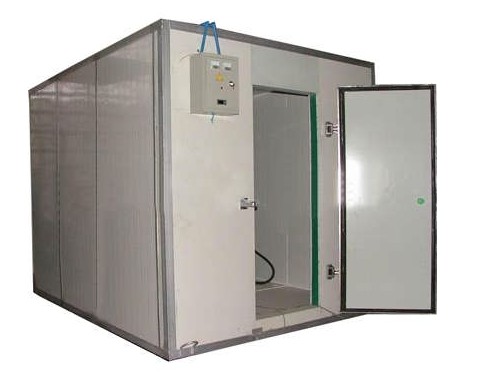
Operational cold storage facility in CIS region. Panels manufactured with HFC-blown polyol systems are coming up for re-validation as the HFC phase-out timeline tightens globally.
What's actually happening in Russia's polyol market
Three things converged after 2022, and the consequences are now compounding:
1. Western suppliers withdrew, partially. BASF closed its Saint Petersburg office in 2022. Covestro paused new investments. Dow ceased certain product flows. None of this was a clean exit — distributors and gray-market channels kept some material flowing — but the technical support layer that came with those brands largely evaporated. R&D engineers in Moscow no longer have a Western counterpart to call when a formulation drifts.
2. Domestic polyol expansion accelerated. Sibur, Kazan Petrochemical, NIIPM, and others ramped up output of base polyols and pre-formulated systems. Capacity climbed; commodity flow stabilized. But "HFO-optimized rigid foam blends with 5-year aging data and cold-cure validation" is a much narrower technical product than "polyol." That gap remains.
3. HFC regulatory pressure mounted. The EU and US are well into HFC phase-out under the Kigali Amendment (HFC-245fa banned for most applications since 2024). Russia hasn't formally adopted Kigali parity, but the export reality bites: any Russian cold-chain panel sold into EU or compliant export markets needs HFO-validated insulation. Domestic-only producers can wait. Anyone with an export book cannot.
The result: Russian R&D directors are running validation programs they didn't anticipate two years ago, often with shrunken supplier rosters and tightening regulatory windows.
Why HFO matters for your K-value spec
A quick refresher on what's at stake. The blowing agent inside rigid PU foam isn't decorative — it's structural. The gas trapped in the closed cells determines a substantial portion of thermal conductivity (K-value). Air alone gives K ≈ 26 mW/m·K. HFC-245fa (now phased out in the West) gives K ≈ 20-22. HFO-1233zd or HFO-1336mzz-Z give K ≈ 21-22 — competitive with the legacy HFC.
But — and this is the technical wrinkle that catches OEMs off-guard — swapping the blowing agent without re-tuning the polyol formulation degrades performance noticeably. HFO has different solubility in polyols, different reactivity profile, slightly different thermal conductivity, and (in some grades) UV sensitivity. A formulation tuned for HFC running on HFO can produce:
- Cream-time drift of 10-25%
- Surface skin defects on panel lamination
- Closed-cell content drop from 95% to 88-92%
- K-value increase of 1-3 mW/m·K
- Faster K-value drift over 5 years
For a refrigerator OEM hitting an A++ energy rating, a 2 mW/m·K K-value drift is the difference between "passes spec" and "needs an extra 5mm of insulation." For a cold-storage panel plant, it's the difference between a 5-year warranty claim and clean operations through year 8.
This is why every Russian plant currently transitioning is also revalidating the polyol system — not just the blowing agent.
The 18-month parallel-validation protocol
The Russian and CIS plants that started this transition in 2024 followed a fairly consistent protocol. We've seen variations, but the core looks like this:
Months 1-3: Sample evaluation
- Receive 5-10 kg of an HFO-optimized polyol blend (we ship via DHL or air, 3-5 days to Moscow / Saint Petersburg)
- Run 3-5 reactivity / pour-pattern tests on plant-floor dispenser
- First-pass K-value testing at internal lab and accredited third-party (typically TsNIIskhP or local equivalent)
- R&D engineer video-call review (we've been doing these via Telegram with Russian-speaking translation)
Months 4-9: Parallel production
- Allocate 10-15% of one production line to the new HFO-polyol system
- Main line continues with current HFC-polyol supplier (zero capacity disruption)
- Three production batches with full QA cycle: density, K-value, closed-cell, compression strength, dimensional stability
- One panel from each batch goes to extended thermal aging (70°C × 95% RH × 168h to predict 5-year drift)
Months 10-12: Spec validation and customer feedback
- Pilot panels go into actual cold-storage installations (we've worked with one Krasnoyarsk customer who put pilot panels in their own freezer warehouse to monitor real-world drift)
- 6-month service data flows back to R&D
- Final formulation lock-in
Months 13-18: Full transition
- Production line gradually shifts from old supplier to new system (15% → 30% → 60% → 100%)
- Old supplier wound down as drum stock depletes
- New baseline established with COA per batch and quarterly accelerated-aging recheck
Total elapsed time
~18 months from first sample to full production transition, with zero capacity disruption to the existing line. That's the pattern. Plants that compress this to 6-9 months almost always end up debugging in production — which costs more in scrap and customer claims than the saved time.
What to look for in an HFO-optimized polyol supplier
If you're at the supplier-evaluation stage, here's the checklist we'd use:
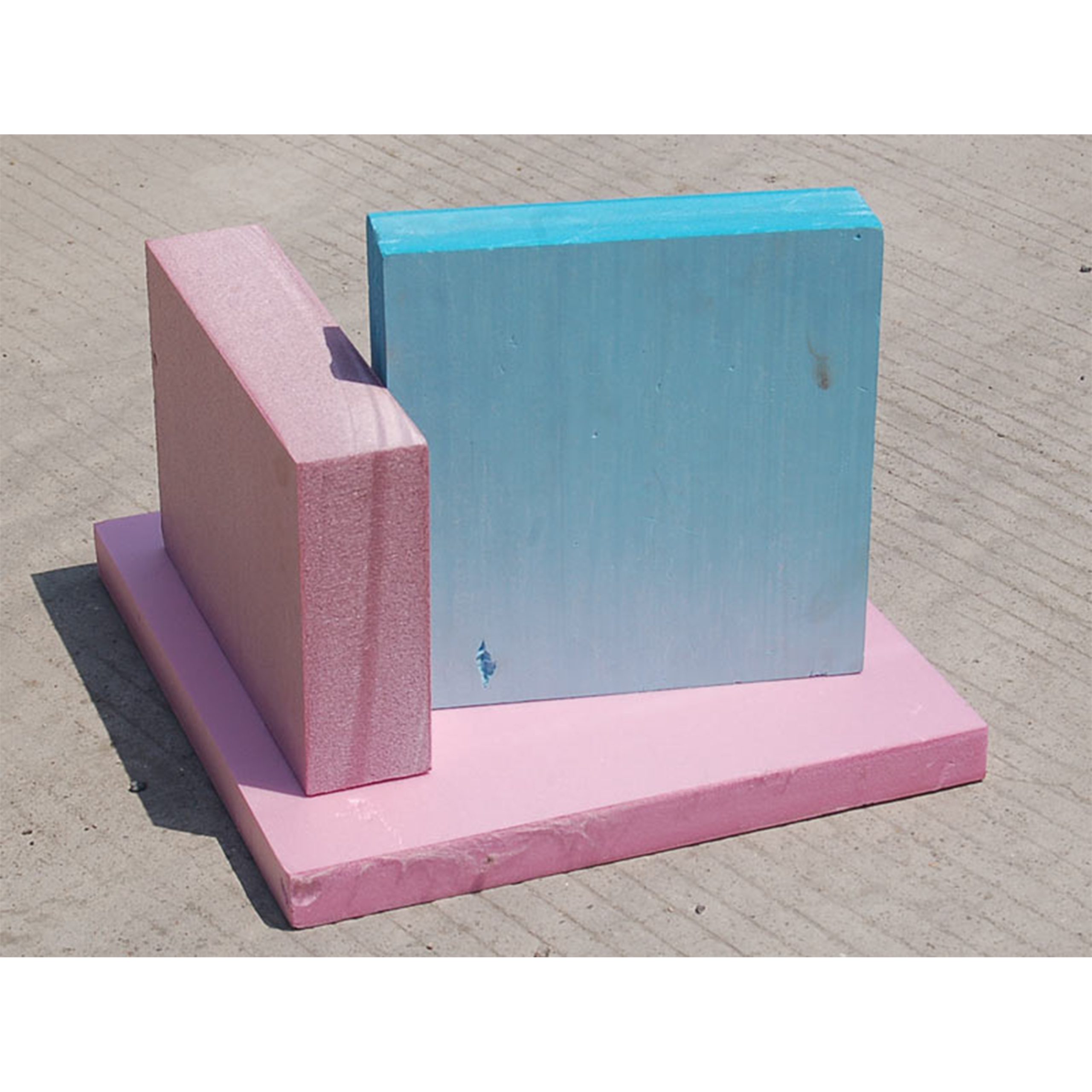
Rigid HFO-blown MDI-polyol panel, density 35 kg/m³. The closed-cell white structure is what holds K-value across thermal cycles for 8-10 years of asset life.
1. HFO chemistry validation, not just compatibility
Ask: "Have you formulated this specific blend with HFO-1233zd, or are you adapting an HFC formulation?" The answer matters. A formulation adapted from HFC will show drift; a formulation designed for HFO from the start won't.
2. 5-year accelerated aging data on the actual blend
Don't accept "our polyols are stable." Ask for the specific aging curve on the specific blend you're evaluating. 70°C × 95% RH × 168h is the industry standard accelerated aging proxy for ~5 years of field service.
3. Cold-cure performance below 15°C
Russian shop-floor temperatures swing dramatically — Moscow R&D labs in February run 14-16°C, plant floors in Yekaterinburg can drop to 8-10°C. Your formulation needs to maintain cream-time stability across this range, or you'll see winter-shift productivity drops of 15-25%.
4. Batch consistency CoV
Ask for batch-to-batch coefficient of variation on key parameters: K-value, density, closed-cell content. A good supplier shows you ≤ 2% CoV. A vague answer means they don't measure it consistently.
5. Russian-language technical support
This is the new reality of 2026. The supplier needs an actual Russian-speaking R&D contact, not just a translator. Telegram or VK is the working channel for most Russian R&D engineers — verify your supplier is on it.
6. Logistics path
Sea via Vladivostok / Saint Petersburg takes 14-21 days from China. Rail via Manzhouli or Erenhot is 12-16 days. Truck via the Khorgos border crossing in Kazakhstan is faster but lower volume. Confirm the supplier has a working logistics path for your facility's port.
7. Payment workflow
Ruble payments via SWIFT alternative routes work but require setup. Some Chinese suppliers accept CNY; some prefer USD via third-country routing. Confirm before you commit, not at the contract stage.
Where Sibur (and other domestic options) fit
We're not in the business of dismissing Russian domestic suppliers. Sibur is a serious player with vertical integration and political alignment. For commodity polyol streams, base flexible foam, certain rigid grades — Sibur is competitive.
The gap, today, is on HFO-validated, refrigerator-OEM-spec rigid systems with sub-2% batch CoV and accelerated-aging data. Sibur is closing it; competitors are closing it. But for plants making transition decisions in Q2-Q3 2026, that gap is real, and that's the niche where we ship.
A reasonable supplier mix for a Russian cold-storage plant in 2026:
- 70% domestic (Sibur or equivalent) for stable, validated commodity grades
- 20% Chinese specialty (us or a competitor) for HFO-optimized rigid systems and custom formulations
- 10% Western residual (BASF/Covestro through distributors) where contracts and inventory still flow
This isn't a pitch to replace your domestic supplier. It's a strategic backup architecture that hedges supply, currency, and regulatory shocks.
Common transition mistakes we see
After 12+ months of working with Russian cold-storage customers on HFO transitions, these are the patterns:
-
Compressing 18-month validation into 6 months. Always ends in production scrap and warranty claims. The chemistry doesn't care about your timeline.
-
Validating only at one density. Most plants run multiple panel grades (30, 35, 40, 45 kg/m³). Validate all of them, or you'll have a great-performing 35 kg/m³ formulation and a problematic 40 kg/m³ when you switch grades.
-
Skipping the accelerated aging step. A formulation that's flat at month 1 may drift hard by month 24. Aging data is the only way to know.
-
Assuming Sibur's domestic stability extends to all grades. It doesn't. Validate every grade you use.
-
Treating HFO as a simple drop-in. It isn't. The polyol side has to be retuned. Suppliers offering "drop-in HFO" are over-promising — even if the data sheet looks identical to the HFC version.
-
Single-sourcing in 2026. This is the year to set up a backup supplier, not the year to consolidate.
Where SPC fits (and where we don't)
We supply HFO-optimized MDI-polyol blends to Russian cold-storage and refrigerator-OEM customers, primarily as a strategic backup or as the HFO transition partner. We're a Chinese supplier — that's not BASF or Sibur, and we don't pretend it is. What we do bring:
- HFO-1233zd and HFO-1336mzz-Z validated MDI-polyol blends for rigid foam, 30-45 kg/m³
- Cold-cure formulations validated to 5°C plant temperatures
- 12-month batch CoV ≤ 2%, verified with COA per batch
- 5-year accelerated aging data on each blend
- Russian-language technical support via Telegram (R&D engineer, not just sales)
- Logistics: rail via Manzhouli (~14 days) or sea via Vladivostok / Saint Petersburg (~18 days)
- ⚠️ GOST certification: status varies by formulation; we'll confirm specific to your spec
- ⚠️ Payment workflow: CNY direct or USD via third-country, depending on your bank
We're not a fit if:
- You need a 24-month commodity contract for 5,000+ tons of generic polyol (Sibur is your supplier)
- You need 10-year vintage aging data (BASF is the only one with that)
- You need IATF 16949 certification for automotive Tier-1 supply (we're not certified yet)
If you're in the middle of an HFO transition decision and want a strategic backup or a primary HFO partner — let's talk.
FAQ
Q: How does Russian regulatory adoption of Kigali compare to EU and US?
The EU has been phasing out HFC since 2014 (full ban for most rigid foam applications by 2025). The US started in 2024 under the AIM Act. Russia has not formally adopted Kigali parity, but voluntary industry transition is happening, driven primarily by export market requirements. Plants serving export markets need HFO-validated systems; domestic-only plants have more time, but the trend is one direction.
Q: Can I run HFO-1233zd on my existing dispenser without modification?
Generally yes — both Cannon and Hennecke high-pressure dispensers handle HFO-1233zd at standard parameters. You may need minor temperature/pressure adjustments. Our R&D engineer will work with your specific machine model on commissioning.
Q: What's the price gap between HFC and HFO-validated systems?
HFO-blown systems typically run 10-15% above HFC-blown systems on a kg-of-polyol basis, due to HFO blowing agent cost. On a per-panel basis the gap is smaller (~5-8%) because the HFO formulation can sometimes run at slightly lower density for the same K-value.
Q: Do you ship in rubles?
Workflow varies. Most Russian customers use CNY direct (we maintain a CNY-RUB swap relationship) or USD via Hong Kong / Dubai routing. We've executed both in the past 12 months. Specific to your bank.
Q: What's the lead time for a 1,000 kg first sample order to Moscow?
DHL air for samples (1-5 kg): 3-5 days. Rail freight via Manzhouli for 1,000 kg: 14-18 days door-to-port. Sea via Saint Petersburg: 18-22 days. Air freight for urgent: 7-10 days but priced 5-8x sea.
Want our HFO Transition Decision Matrix?
If you're an R&D director or factory owner planning an HFC-to-HFO transition for a Russian cold-storage or refrigerator-OEM facility, we have a free 12-page decision matrix PDF covering: validation timeline templates, supplier evaluation checklist, accelerated aging protocol, cold-cure validation methodology, and Russian logistics options.
Request the HFO Transition Decision Matrix + 5kg sample — sent within 48 hours via your preferred channel.
If you'd rather start with a 30-min Telegram call with our R&D engineer (Russian via translator on request, or direct Russian if available that day), book a slot here.
SPC manufactures MDI-polyol blends for industrial refrigeration, cold-storage panels, and rigid PU foam applications. Headquartered in Wuxi, Jiangsu, China. We work with Russian and CIS cold-chain customers via rail freight and air, with Telegram-based R&D support.


