
PU Elastomer Raw Material
For PU Shock Absorption Parts
High-performance polyurethane elastomer systems for vibration dampers, shock-mounts, motor bushings, machinery isolators, and impact-absorption components. Engineered for tunable damping characteristics and fatigue life under cyclic loading.
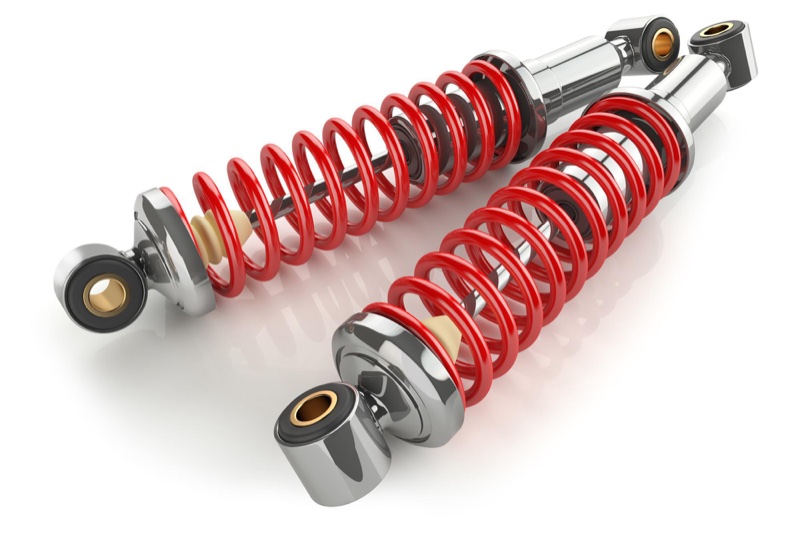
PU Elastomer Materials for Vibration Damping & Shock Isolation
Blendpolyol supplies polyurethane elastomer raw material systems for manufacturing vibration dampers, motor mounts, shock-absorption bushings, machinery isolators, conveyor anti-vibration pads, and impact-absorbing components for industrial machinery and automotive aftermarket applications.
Our formulations deliver:
- Tunable damping factor (tan δ 0.10–0.30) via formulation control
- High rebound (35–55%) or controlled-damping variants
- Fatigue life 10⁶ – 10⁷ cycles under typical loading
- Service temperature −30°C to +90°C
- Low compression set for long-term isolator dimensional stability
Typical Applications
Motor / Equipment Mounts
Vibration isolation between motors and frames in industrial machinery.
Conveyor Anti-Vibration Pads
Floor isolation for vibratory conveyors and screening equipment.
Shock-Absorbing Bumpers
Impact-absorbing bumpers for material-handling equipment.
Stamping Press Pads
Cushioning under stamping dies + heavy-press operations.
Wind Turbine Tower Dampers
Tuned mass dampers for wind tower vibration mitigation.
Heavy-Vehicle Suspension Bushings
Truck / off-highway suspension component manufacturing.
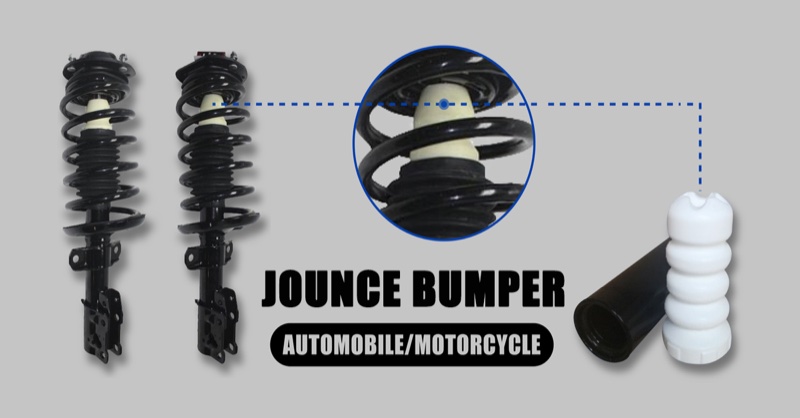
Jounce bumper — microcellular PU, 10⁷ cycle fatigue
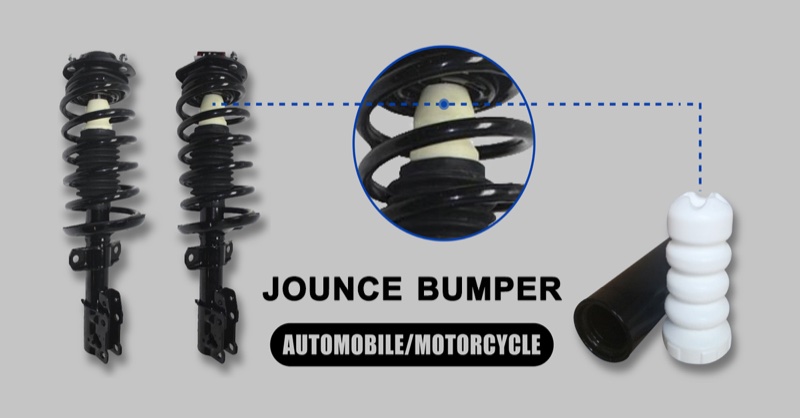
Impact-absorbing bumper — heavy-equipment protection
Typical Technical Parameters
Actual parameters customizable according to formulation design and application requirements.
Compatible Production Processes
Vacuum Casting
For precision parts requiring void-free casting.
Open Mold Casting
Suitable for large parts and simple geometries.
Centrifugal Casting
Used for cylindrical components requiring uniform density.
Automated Casting
Compatible with PU casting machines and automated dispensing.
One-Stop PU Elastomer Solution
Besides polyurethane raw materials, Blendpolyol also provides matched equipment and tooling — making us a complete production-line partner, not just a chemical supplier.
- PU elastomer casting machines (manual, semi-auto, fully-automatic)
- Metering and mixing systems (low-pressure & high-pressure)
- PU molds (steel / aluminum, custom design)
- Heating systems (drum heaters, mold heaters, oven systems)
- Complete production line solutions with engineering support
We support customers from raw material selection → equipment matching → process optimization → mass production.
Frequently Asked Questions
How do I specify damping vs rebound for my application?
High-rebound (45–55%) for general vibration isolation where energy return matters. Controlled-damping (tan δ 0.20–0.30) for tuned mass damper applications where energy dissipation is the goal. We tune via prepolymer + chain extender chemistry — share your loading frequency + amplitude and we recommend.
What fatigue life can I expect?
Standard formulations: 10⁶ cycles at 70% peak elastic strain with <15% modulus drop. For 10⁷-cycle applications (wind turbine, heavy industrial), specify reinforced or composite formulation — 25–35% premium pricing.
What hardness range can you provide?
We provide formulations from soft elastomer systems (Shore A 60–70) to ultra-hard industrial materials (Shore D 70–75). Specific hardness is tuned via prepolymer NCO content + chain extender ratio.
MDI vs TDI systems — which is right for me?
MDI systems provide higher load-bearing performance and lower toxicity (no free TDI vapor) — preferred for indoor casting. TDI systems offer better elasticity, rebound, and abrasion resistance — preferred for dynamic-load and high-wear applications.
Can you customize formulations?
Yes. We customize hardness, rebound, abrasion resistance, chemistry resistance, and processing characteristics. Custom formulation MOQ is typically 1,000 kg; development cycle 3–5 weeks including bench testing and customer-site trial.
Do you provide complete production solutions?
Yes. We supply raw materials, casting machines, mixing systems, custom molds, heating systems, and production line engineering support. End-to-end onboarding from formulation selection to mass production typically takes 3–4 months.
Talk to Our Elastomer Team
Reply within 24 hours · TDS · MSDS · COA · Free 1 kg sample · 60+ countries served