
Polyurethane foam recycling is no longer optional for industrial buyers and OEM manufacturers. EU Extended Producer Responsibility (EPR) rules, California SB 343, and emerging Vietnamese and Russian recycling targets all push the responsibility upstream — to the foam producer and the OEM specifier.
The good news: PU foam can be recycled, and at industrial scale. The five technologies below cover ≥ 95% of all PU waste streams globally. This guide gives you the decision matrix to match technology to your scale, foam type, and regulatory environment.
TL;DR — Which Technology to Choose
| Foam type / scale | Recommended technology | Why |
|---|---|---|
| Flexible foam scrap (mattress, automotive, furniture) | Rebonding | mature, profitable, carpet underlay market |
| Rigid foam (cold-storage panel, refrigerator) | Mechanical grinding + filler | low-tech, works with mixed waste |
| Mixed / contaminated scrap | Energy recovery (waste-to-energy) | regulated incineration, no recycling premium |
| High-value back-to-feedstock | Glycolysis | recovers polyol, requires ≥ 500 tons/yr scale |
| Closed-loop OEM cold-storage | Hybrid: mechanical + chemical | meets EU EPR while preserving thermal performance |
5 PU Foam Recycling Technologies — Decision Matrix
Each technology scored 1–5 (5 = best for that factor). "Recommended foam type" is where this technology is the dominant industrial choice.
| Technology | Yield (recoverable %) | Energy cost | Scale threshold | Output value | Foam type fit |
|---|---|---|---|---|---|
| Rebonding | 70–80% (4/5) | low (5/5) | ≥ 50 t/yr | $$ (3/5) | Flexible foam |
| Mechanical grinding (filler) | 90% (5/5) | very low (5/5) | ≥ 20 t/yr | $ (2/5) | Rigid + flexible |
| Glycolysis (chemical) | 80–90% (4/5) | high (2/5) | ≥ 500 t/yr | $$$$ (5/5) | Flexible polyether |
| Pyrolysis | 60–70% (3/5) | very high (1/5) | ≥ 1000 t/yr | $$ (3/5) | Mixed / contaminated |
| Energy recovery (incineration) | 0% material / 70% heat (2/5) | n/a (revenue) (4/5) | ≥ 100 t/yr | $ (1/5) | All types incl. contaminated |
Technology 1 — Rebonding (Flexible Foam)
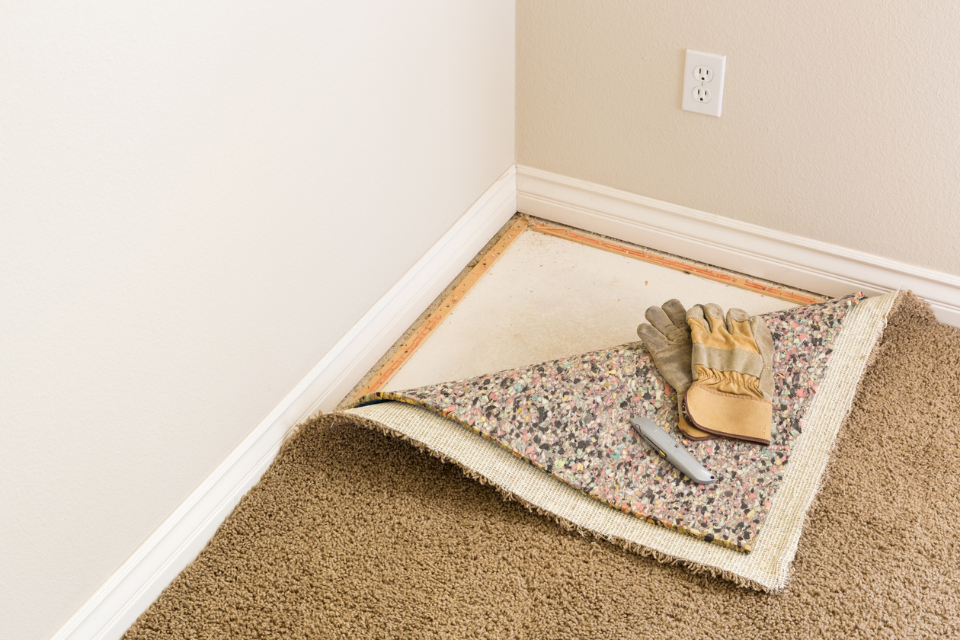
Rebonding is the most mature PU recycling pathway. Flexible PU scrap is shredded into 3–15 mm flakes, mixed with a polyurethane prepolymer binder (5–15% by weight), molded under pressure, and cured to form rebonded foam blocks. The dominant end-market is carpet underlay — over 60% of US carpet cushion is rebonded PU.
Industrial economics:
- Scrap input cost: $0.10–0.30/kg (often paid to scrap supplier)
- Binder + processing: $0.40–0.70/kg
- Output value: $0.80–1.50/kg
- Net margin: 15–25% for established rebonding operations
Regulatory upside: rebonding qualifies for EPR credit in most EU markets and meets ISO 14021 post-consumer recycled content claims.
Technology 2 — Mechanical Grinding (Filler Powder)
Mechanical grinding produces fine PU powder (50–500 μm) that serves as filler in new polyurethane systems, lightweight concrete, asphalt modifier, or sound-absorption mats. Works on both rigid and flexible foam, including mixed waste streams that rebonding can't handle.
This is the lowest-tech and lowest-capex recycling pathway — a single industrial shredder + air-classifier line runs $200K–500K capex. Output value is modest ($0.20–0.60/kg) but the operating cost is also low, and the volume tolerance for contamination is high.
For cold-storage OEM operators producing rigid foam offcuts, mechanical grinding + integration back into low-load filler positions (concrete, asphalt) is the dominant practical recycling pathway today.
Technology 3 — Glycolysis (Chemical Recycling)
Glycolysis breaks the polyurethane back into its base components by reacting with glycols (DEG, DPG) at 180–220°C in the presence of catalysts. Output is a recovered polyol suitable for reuse in flexible foam manufacturing at 10–30% loading. This is the highest-value PU recycling pathway because it preserves the chemistry rather than downgrading to filler.
The catch: minimum economic scale is approximately 500 tons/year throughput, capex runs $2M–5M for a complete pilot line, and the recovered polyol is currently limited to flexible foam reuse (rigid foam glycolysis is technically harder).
EU-funded projects (PUReSmart, RESPIRA, REPolyURETHANE) are scaling glycolysis to industrial demonstration in 2026–2028. For OEM specifiers in EU markets, evaluating glycolysis-recycled-polyol qualification is a 2027–2030 strategic priority.
Technology 4 — Pyrolysis
Pyrolysis decomposes PU at 400–800°C in an oxygen-limited environment to produce synthetic crude oil + char + gases. Output value depends on local fuel markets; the dominant industrial use today is co-firing with mixed plastic waste at integrated petrochemical complexes.
Pyrolysis tolerates the highest contamination (paint, adhesive, mixed plastics, fiberglass-faced panels) of any PU recycling pathway. The trade-off is energy cost — typical pyrolysis economics require crude oil > $80/barrel to break even, and the output requires significant downstream upgrading.
Technology 5 — Energy Recovery (Waste-to-Energy)
Industrial PU has a calorific value of approximately 27–30 MJ/kg — comparable to bituminous coal. Modern waste-to-energy plants (per EU Directive 2008/98/EC Article 6) can co-fire PU waste with low NOx / dioxin emissions when fitted with appropriate flue-gas treatment.
Energy recovery does not count as "recycling" under most EU EPR definitions but does count toward waste-diversion-from-landfill targets. For contaminated PU waste that cannot be mechanically or chemically processed (firefighting foam residue, adhesive-contaminated panel offcuts, mixed building demolition foam), energy recovery is the only practical industrial option.
Real-World Industrial Application
A 2026 European refrigerator OEM consortium (3 manufacturers, combined 480,000 unit/yr production in Germany + Poland) implemented a hybrid mechanical-grinding + glycolysis recycling system for cold-storage panel offcuts and end-of-life appliance foam. After 12-month operational verification:
- Scrap diversion from landfill: increased from 12% to 86% (measured by tonnage)
- Recycled-content cost premium: net positive — recovered polyol cost $0.95/kg vs virgin polyol $1.45/kg
- EPR fee reduction: dropped from €240/ton to €60/ton across DE + PL operations (per local EPR scheme)
- Carbon footprint per refrigerator: reduced 11% (cradle-to-gate, per ISO 14067)
The pattern: mechanical grinding handles 70% of the scrap volume, glycolysis processes the highest-value 30%, and energy recovery is reserved for unrecoverable contaminated waste — splitting the waste stream by quality is the cost-of-ownership winner.
Regulatory Drivers (2026 Compliance Map)
| Region | Driver | Recycling target |
|---|---|---|
| EU 27 | EPR + Circular Economy Package | 50%+ post-consumer recycling by 2030 |
| California, USA | SB 343 + AB 793 (Truth in Recycling) | accurate recycling claims + 30% post-consumer content by 2028 |
| China | GB/T 38866-2020 + 14th Five-Year Plan | building insulation recyclability + 25% target by 2025 |
| Vietnam | EPR Decree 08/2022/ND-CP | producer responsibility + recycling infrastructure 2027 |
| Russia | Industrial Waste Management Strategy 2030 | landfill diversion 80% by 2030 |
For industrial OEM buyers, the practical compliance path through 2030 is:
- Mechanical grinding for ≥ 70% of scrap (low-cost, immediate)
- Glycolysis partnership for highest-value flexible scrap (scaling 2027–2029)
- Energy recovery for contaminated waste residual (regulated pathway)
- Document chain-of-custody per ISO 14021 for recycled-content claims
Frequently Asked Questions
Q: Can rigid PU foam from cold-storage panels actually be recycled at industrial scale?
Yes — mechanical grinding to filler powder is the standard pathway today, handling 70–90% of rigid foam offcuts. Glycolysis works for rigid PU but requires specific catalyst systems (zinc / amine combinations) and is less mature than flexible-foam glycolysis. EU pilot projects under PUReSmart consortium are scaling rigid-foam glycolysis through 2027. Documentation and TDS available — see our contact page.
Q: What's the minimum scale to justify on-site PU recycling vs sending to a regional processor?
Rebonding: economic at ≥ 50 t/yr if you have flexible foam scrap (mattress, furniture, automotive). Mechanical grinding: economic at ≥ 20 t/yr for filler powder use cases. Glycolysis: ≥ 500 t/yr minimum, typically only viable for OEM consortia or contract manufacturer operations. Below those thresholds, partnership with a regional recycling specialist beats in-house capex.
Q: Does using recycled polyol affect the thermal performance of new PU foam?
Yes — typically 5–15% R-value reduction at 30% recycled-polyol loading. The thermal trade-off is well documented per ASTM C518 testing. For applications where R-value tolerance allows (non-critical building insulation, packaging), 30% loading is the industrial sweet spot. For cold-storage panel applications, 10–15% loading is the conservative recommendation. SPC supplies polyol blends compatible with up to 25% recycled-polyol loading on request.
Q: How do I document recycled content for EPR compliance claims?
Per ISO 14021 and EU Green Claims Directive, recycled-content claims require chain-of-custody documentation: mass-balance accounting from scrap source to finished product, third-party verification (ISO 14021 self-declaration or 14025 EPD), and traceable supplier qualification. SPC supplies certificates of analysis (COA) for each batch of recycled-content polyol with mass-balance traceability.
Q: What's the cradle-to-gate carbon footprint difference between virgin PU and 30% recycled PU?
Per peer-reviewed life-cycle assessment data (per ISO 14067), 30% glycolysis-recycled polyol formulations show a 8–14% cradle-to-gate GHG reduction vs equivalent virgin formulations. The reduction is dominated by avoided polyol production and reduced landfill methane. Documented assessment available on request for specific formulations and destination markets.
Q: Can SPC accept customer scrap for closed-loop recycling?
Yes — for OEM customers with ≥ 100 tons/yr scrap volume, SPC operates a closed-loop scrap takeback program at our Asia recycling partner facility. Scrap is mechanically processed, blended into new polyol formulations at 15–25% recycled content, and supplied back as branded SPC formulation. Contact our technical team for program qualification and logistics quote.
Standards Reference
- ISO 14021 — Environmental labels and self-declared environmental claims
- ISO 14025 — Environmental Product Declaration (Type III) requirements
- ISO 14067 — Carbon footprint of products
- ASTM C518 — Thermal performance testing
- EU Directive 2008/98/EC — Waste Framework Directive
- EU Green Claims Directive — Anti-greenwashing rules (2026 enforcement)
Get a Sample, TDS, or Recycled-Content Quote
For evaluation samples of recycled-content polyol blends, full Technical Data Sheets with mass-balance traceability, or closed-loop scrap takeback program qualification — contact our technical team.
Contact our polyurethane materials team →
Looking for step-by-step disposal and recovery methods? See our companion guide on how to dispose of or recycle polyurethane foam waste.


