
Quick answer. For cold storage panels, refrigerator OEM, or any rigid PU foam application — use MDI. For mattresses, automotive seats, or any flexible foam — use TDI. The chemistry difference is structural: MDI's aromatic backbone gives the rigidity and closed-cell stability you need at -40°C; TDI's smaller molecule gives the resilience flex foam buyers want. Most cold storage failures we audit aren't because of "bad polyol" — they're because someone tried to push a TDI-friendly formulation into a rigid foam application. The 2026 wrinkle: HFC-to-HFO transition is forcing every refrigerator OEM and cold-chain plant to revalidate their MDI-polyol systems anyway. If you're going to revalidate, this is the right moment to also rethink your supplier mix.
If you're a formulation engineer, R&D director, or production manager evaluating polyol blend suppliers for cold-chain panels or refrigeration insulation, this is the technical decision tree we wish more buyers walked through before signing 5-year contracts.
The structural difference (and why it matters)
MDI — Methylene Diphenyl Diisocyanate. Aromatic, larger molecule, two reactive NCO groups separated by a methylene bridge. NCO content typically 31-33%.
TDI — Toluene Diisocyanate. Smaller, more reactive molecule. Comes in two isomers (2,4-TDI and 2,6-TDI), commonly blended 80/20. NCO content 47-48%.
The numbers tell you a lot:
| Property | MDI | TDI 80/20 |
|---|---|---|
| NCO % | 31-33% | 47-48% |
| Vapor pressure (toxicity risk) | Low | High |
| Reaction speed | Moderate | Fast |
| Final foam stiffness | Rigid (high) | Flexible (variable) |
| Cell structure | Closed-cell preferred | Open-cell preferred |
| Service temperature range | -50°C to +100°C | -30°C to +80°C |
| Cost (raw isocyanate) | Mid-high | Mid |
For cold storage and refrigeration, three of these matter most: closed-cell preference, low-temperature stability, and the shape of the cell structure under thermal cycling. MDI wins on all three.
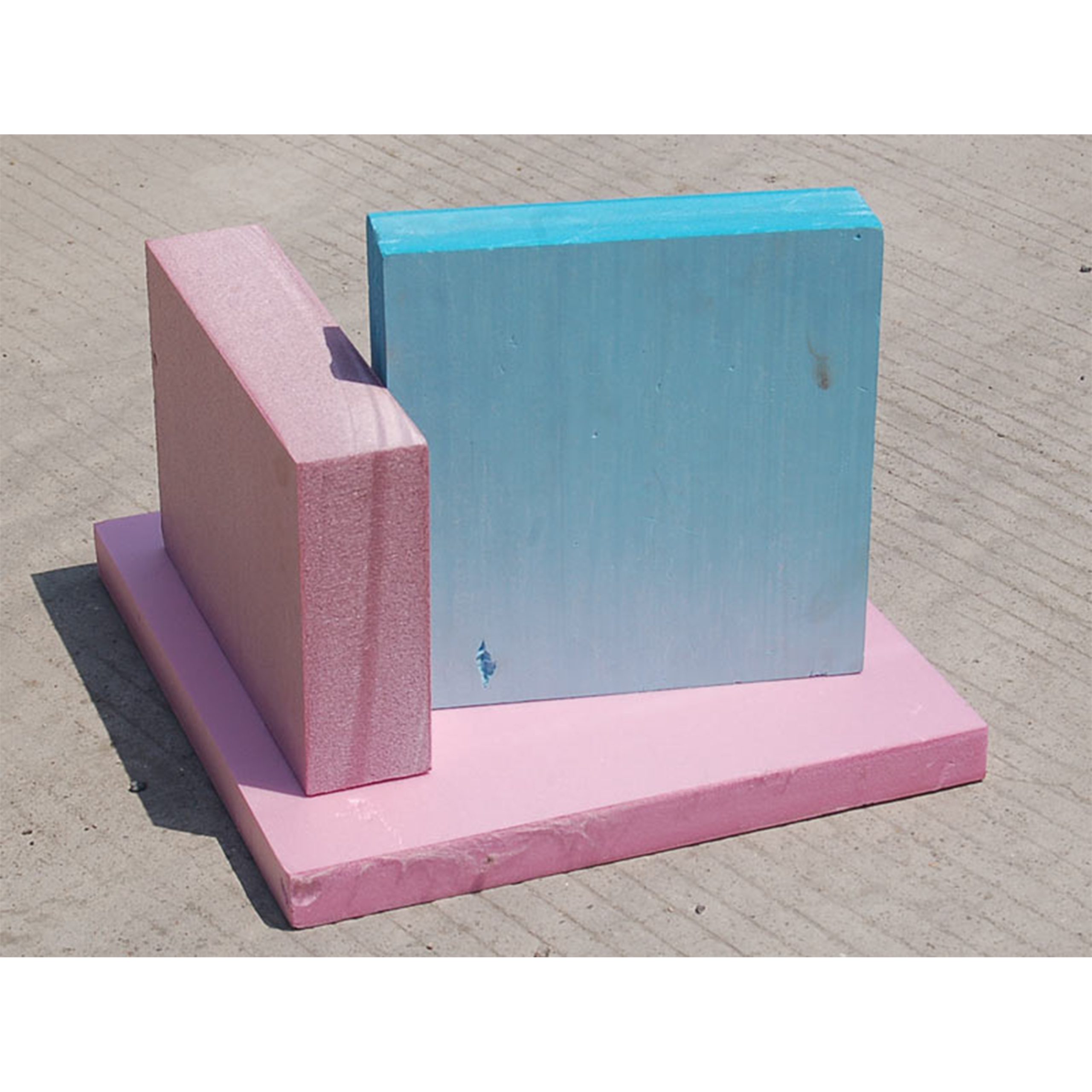
Rigid MDI-polyol foam panel, 35 kg/m³ density, fresh-pressed. The white closed-cell structure is what keeps cold air on one side and ambient on the other for 8-10 years.
Why MDI wins for cold storage
1. Closed-cell content stability
A cold storage panel needs ≥ 95% closed-cell content to keep moisture out. Below that, water vapor diffuses in, freezes inside the foam, expands, and bursts cells over time. K-value drift goes from "expected 5-year creep of +2 mW/m·K" to "unmanageable +5-7 within 24 months."
MDI's larger aromatic structure stabilizes the cell windows during foam rise, especially at the lower densities (30-40 kg/m³) cold-chain plants prefer for cost reasons. TDI-based rigid foams can hit 95% closed-cell, but the operating window is narrower — small variations in surfactant or catalyst push you to 88-92%.
2. Low-temperature embrittlement
At -40°C — the standard service temperature for industrial freezers, vaccine cold rooms, and Siberian cold-chain — TDI-based foams trend brittle. The smaller polymer segments don't absorb thermal stress as well. Microcrack formation under load is well-documented. MDI-polyol systems, with their longer-chain polymeric structure, retain compression strength to -50°C in our testing.
3. K-value performance with HFO blowing agents
The HFC-to-HFO transition (mandatory in EU/US since 2024, Asia-Pacific by 2027 under the Kigali Amendment) changes the math. HFO-1233zd and HFO-1336mzz-Z give K-values of 21-22 mW/m·K — competitive with the old HFC-245fa systems at 20-22 mW/m·K. But HFO compatibility is heavily polyol-dependent. MDI-polyol systems handle HFO blowing better than TDI-polyol systems, where HFO can disrupt cream/gel time predictability.
In practice: every cold storage plant currently switching from HFC to HFO is also revalidating the polyol side of the formulation. This is the validation cycle we're seeing across Russia, Eastern Europe, and Southeast Asia in Q1-Q2 2026.
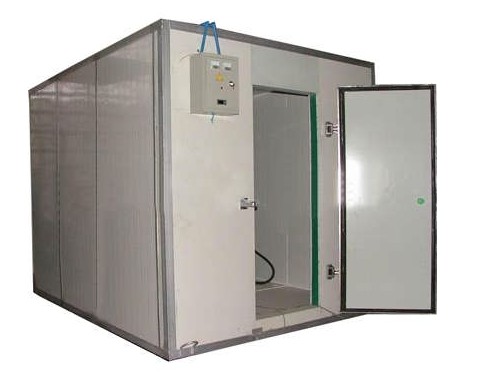
Operational cold storage facility, -25°C ambient. The wall and ceiling panels rely on rigid MDI-polyol foam to maintain K-value across thermal cycles for the asset's 8-10 year service life.
Where TDI still belongs
TDI is not "wrong." It's just wrong for cold storage. For your reference, here's where TDI does dominate:
- Slabstock flexible foam — mattresses, sofa cushions. The high reactivity drives fast rise and good airflow.
- Molded HR foam — automotive seating, premium upholstery. Resilience and tear strength are king.
- Memory foam — pillows, ergonomic mattresses. The slower-recovery cell structure is a TDI strength.
- Carpet underlay — rebond foam reuses TDI scrap.
If your application is on this list, MDI would be the wrong call. But if your factory makes panels that need to keep cold air on one side and hot air on the other for a decade, you want MDI.
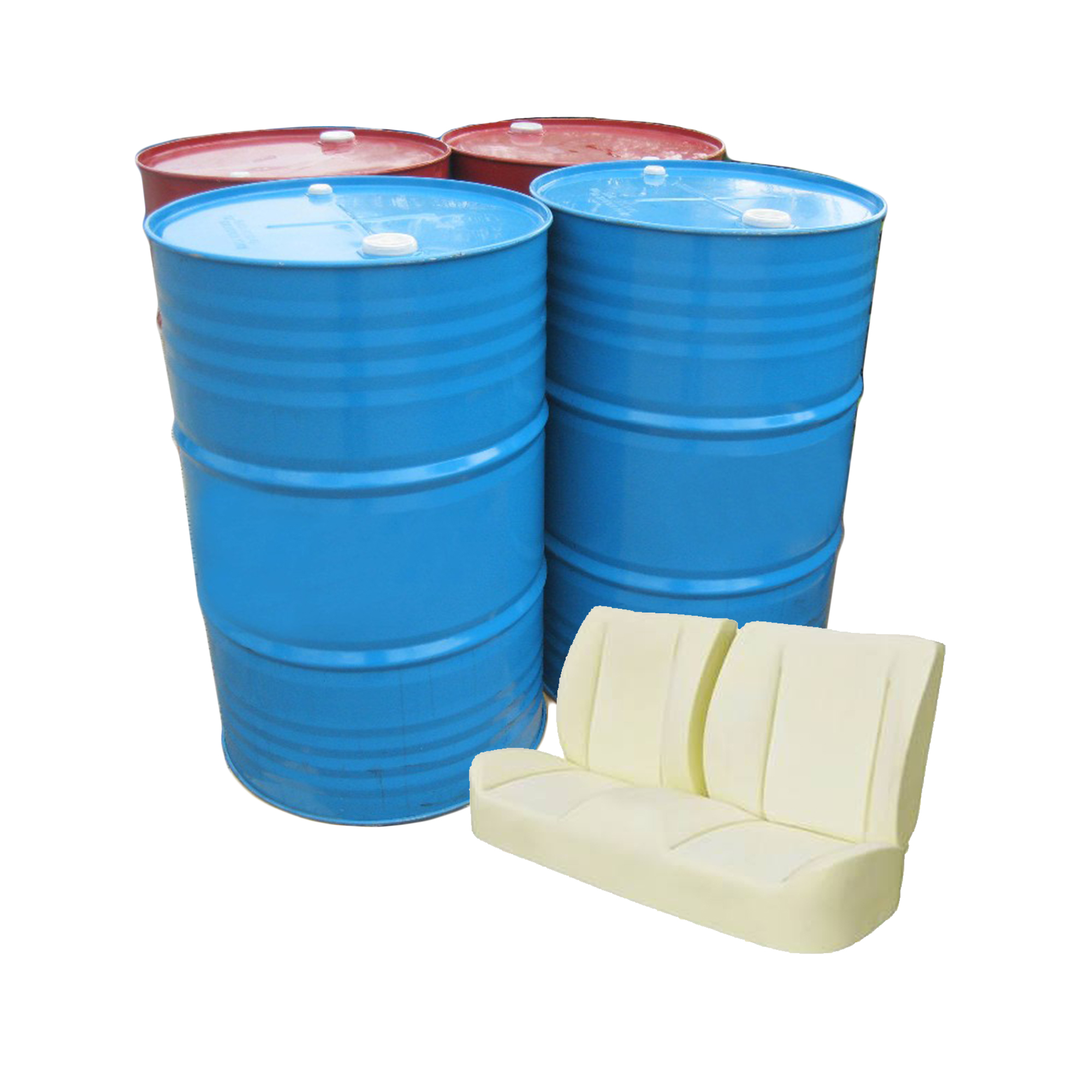
Flexible TDI-polyol foam slab. Open-cell structure, ~35 kg/m³ density. The material that makes mattresses comfortable is the same material that would fail in a cold-storage panel within 18 months.
The Russia / cold-chain angle (why this matters in 2026)
Russia is the largest cold-chain build-out market we serve. After 2022, several factors converged:
- Domestic cold-chain capacity expansion (food security, vaccine logistics, infrastructure)
- BASF / Covestro / Dow partial withdrawal from Russia, leaving formulation supply gaps
- Sibur and other domestic suppliers ramping up — but on legacy MDI-polyol formulations not optimized for HFO
- HFO-1233zd availability tightening as global allocation shifts toward Russia replacement supply
What this means for a Russian cold-storage plant: you can keep your existing MDI-polyol supplier, accept HFC continuation (if your export market allows it), and watch K-value compliance drift. Or you can switch now, validate an HFO-optimized MDI-polyol blend, and be ready when Russia eventually adopts Kigali parity.
We've been shipping MDI-polyol blends to Russian cold-storage plants for the past 12 months. The pattern: 6-month parallel validation, then 3-month gradual switchover, then year 2 ramp. Total elapsed time ~18 months. Plants that started in 2024 are now scaling.
How to evaluate an MDI-polyol blend supplier
If you're at the supplier-evaluation stage (Awareness → Consideration), here's the decision tree we'd use:
1. NCO content and Index window
- MDI NCO 31-33%
- Target Index 105-115 for rigid cold storage
- Ask: "What's your batch-to-batch NCO CoV?" Good answer: ≤ 1.5%. Vague answer: walk away.
2. K-value at temperature, not just nominal
- TDS quotes K @ 10°C or 23°C. Useful for marketing, less useful for cold storage.
- Ask for K-value at -10°C and -25°C. The drop should be < 0.8 mW/m·K from nominal.
- 5-year accelerated aging (70°C × 95% RH × 168h) is the industry-standard predictor. Ask for the report.
3. Closed-cell content under your specific density
- Cold storage tends to 30-40 kg/m³ for cost; high-end refrigeration at 35-45 kg/m³.
- Closed-cell ≥ 95% should hold across this density range without retuning.
- If supplier needs new surfactant package every density change, that's a flexibility signal.
4. HFO compatibility
- Confirm the formulation has been validated with HFO-1233zd (most common) AND HFO-1336mzz-Z (premium/regulated markets).
- Pentane-blown systems should not be your primary path — short-term cost win, long-term regulatory risk.
5. Compression strength + dimensional stability
- ≥ 150 kPa @ 10% deformation for cold-chain panels
- ASTM D2126 dimensional stability (-25°C × 168h): volume change ≤ 1%
- Ask for the report. If they hesitate, they don't have it.
6. Cold-cure performance
- Plants in northern Russia, northern China, northern Europe regularly run < 15°C in winter
- Cream-time/gel-time stability at 10°C should be within 15% of 25°C nominal
- Suppliers without cold-cure data are giving you a summer formulation
7. Batch trial protocol
- Sample size that matters: 5 kg (not 200g)
- Trial run on your actual high-pressure dispenser
- Three batches with internal QA, plus one to a third-party lab
- Total: 6-12 weeks. Anything faster is shortcut.
Common mistakes we see
After 200+ MDI-polyol evaluations across cold-storage and refrigeration plants over the past two years, the same patterns recur:
-
Comparing only on price per kg of polyol blend. Total cost per panel includes: blend price × index-adjusted weight × yield × waste rate. The blend that's 8% cheaper per kg can deliver a panel that's 5% more expensive after waste.
-
Ignoring the dispenser. Cannon, Hennecke, Krauss-Maffei, and Romer dispensers all have slightly different metering tolerances. A polyol designed for one machine may need recalibration on another. Ask the supplier: "Have you commissioned formulations on my specific dispenser?"
-
Skipping cold-cure validation. Plant-floor temperature varies 10-15°C between summer and winter shifts. A formulation that runs perfectly at 25°C may give 30% gel-time drift at 12°C. We've seen winter shifts drop 20% throughput on this issue alone.
-
Trusting nominal K-value without aging data. A 22 mW/m·K nominal K-value that drifts to 28 over 5 years is functionally a 28 mW/m·K product, but customers buy the spec sheet. Ask for 5-year accelerated aging data.
-
Sourcing single-source from a global supplier without backup. Sika, BASF, Covestro, and Dow are excellent — and concentrated. A backup supplier representing 10-20% of consumption hedges currency, supply chain, and regulatory shocks. Many Russian and Indian plants treat this as standard.
Where SPC fits (and where we don't)
We supply MDI-polyol blends, mostly for the cold-storage and refrigerator OEM segments. We're not BASF — we don't have 10-year vintage aging data and we don't have a global service network of 2,000 engineers. We do have:
- 5-year HFO-validated MDI-polyol blends (rigid, 30-45 kg/m³, K ≤ 22)
- Cold-cure formulations validated to 5°C plant temperature
- 12-month batch consistency CoV ≤ 2% (verified with COA)
- Russian-market focus: Telegram-based 24h technical support, factory tour with travel allowance for serious buyers, and local-currency considerations on case-by-case basis
- ⚠️ NSF / FDA food-contact certification: in progress, not yet final. If you're supplying Whirlpool/Bosch global OEM that requires NSF, we should confirm timing.
- ⚠️ IATF 16949 (automotive Tier-1): not yet, so we're not a fit if you're supplying automotive seat foam to a Tier-1.
If you're evaluating MDI-polyol for a refrigerator OEM, cold-storage panel plant, or industrial refrigeration application — and you want to consider a backup or strategic alternative supplier — we should talk.
FAQ
Q: Can I use TDI in a rigid cold-storage application?
Technically yes, with significant formulation work — special crosslinkers, higher Index, and elevated catalyst load. Practically: it's not worth the trouble. TDI-rigid systems hit lower closed-cell content, drop compression strength faster, and cost more in catalyst loading. MDI is the rational choice.
Q: What's the cream/gel time difference between MDI and TDI for the same density target?
For 35 kg/m³ rigid: MDI cream ~10s, gel ~45s; TDI cream ~6s, gel ~25s. TDI's faster reactivity is what makes it good for slabstock production, but it's a constraint in panel manufacturing where you need press-time alignment.
Q: How does HFO compatibility differ between MDI and TDI systems?
HFO-1233zd interacts more predictably with MDI's aromatic chemistry. With TDI, HFO can shift gel time by 15-20% and disrupt rise profile. This is one reason HFC-to-HFO transition is mostly a non-issue for rigid (MDI) formulations and a real problem for flexible (TDI) where HFO substitution remains rare.
Q: We're a Russian cold-storage plant currently using HFC. Should we switch to HFO now or wait?
If you export to EU or want optionality on EU exports: switch now. Validation takes 12-18 months. If you're domestic-only and Russia hasn't adopted Kigali parity yet, you have more time but the trend is clear. We'd recommend starting validation work in 2026 regardless.
Q: What MOQ for first samples and trials?
1 kg sample free (DHL air, 3-5 days). First trial batch 1,000 kg. Standard reorder 3,000-10,000 kg. We've made exceptions for Russian and Asian buyers running serious validation programs.
Q: How do you handle Russian-market specifics — payment, shipping, GOST?
On a case-by-case basis. Telegram is our primary support channel for Russian buyers. ⚠️ Specific GOST certification status and payment workflow vary — we should discuss your specific situation directly.
Want our MDI-polyol decision matrix PDF?
If you're evaluating MDI-polyol suppliers for cold storage or refrigeration, we have a free 8-page decision matrix PDF covering: NCO content windows, Index recommendations by application, HFO compatibility checklist, cold-cure validation protocol, and sample test plan template.
Request the decision matrix PDF + 1 kg sample — we ship within 48h.
If you'd rather start with a 30-min technical call with our R&D engineer (fluent English; Russian via translator on request), book a slot here.
SPC manufactures MDI-polyol blends for industrial refrigeration, cold-storage panels, and rigid foam applications. Headquartered in Wuxi, Jiangsu, China. Visits welcome — flight allowance for serious evaluations.
Sourcing Blended Polyol Systems?
SPC formulates rigid, flexible, spray and elastomer polyol systems for refrigerators, cold-storage panels, SIP plants and automotive seats. ISO 9001 plant in Jiangyin, China · 60+ countries served.
✓ Free 1 kg sample
✓ TDS · MSDS · COA
✓ Reply within 24 h


